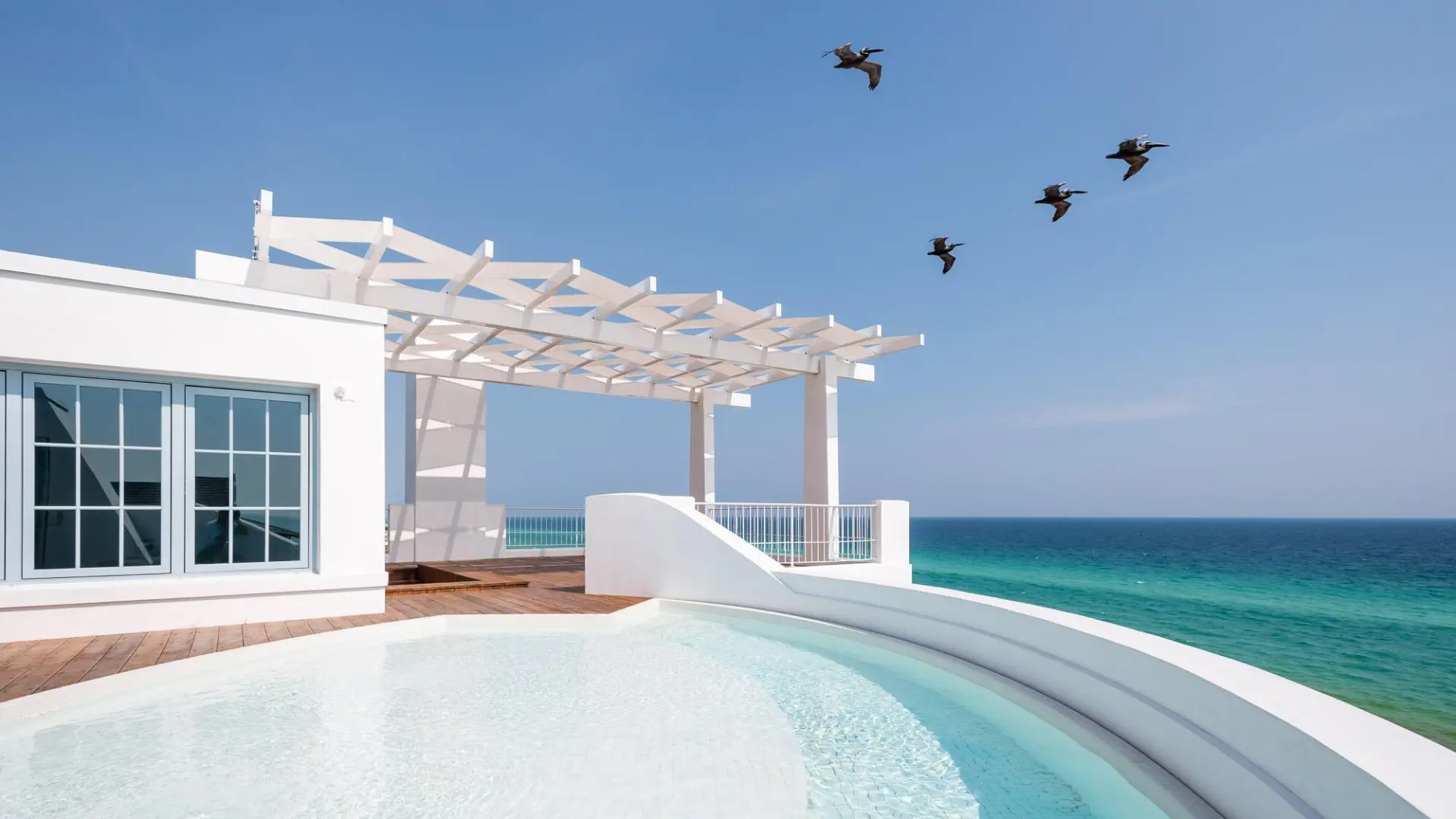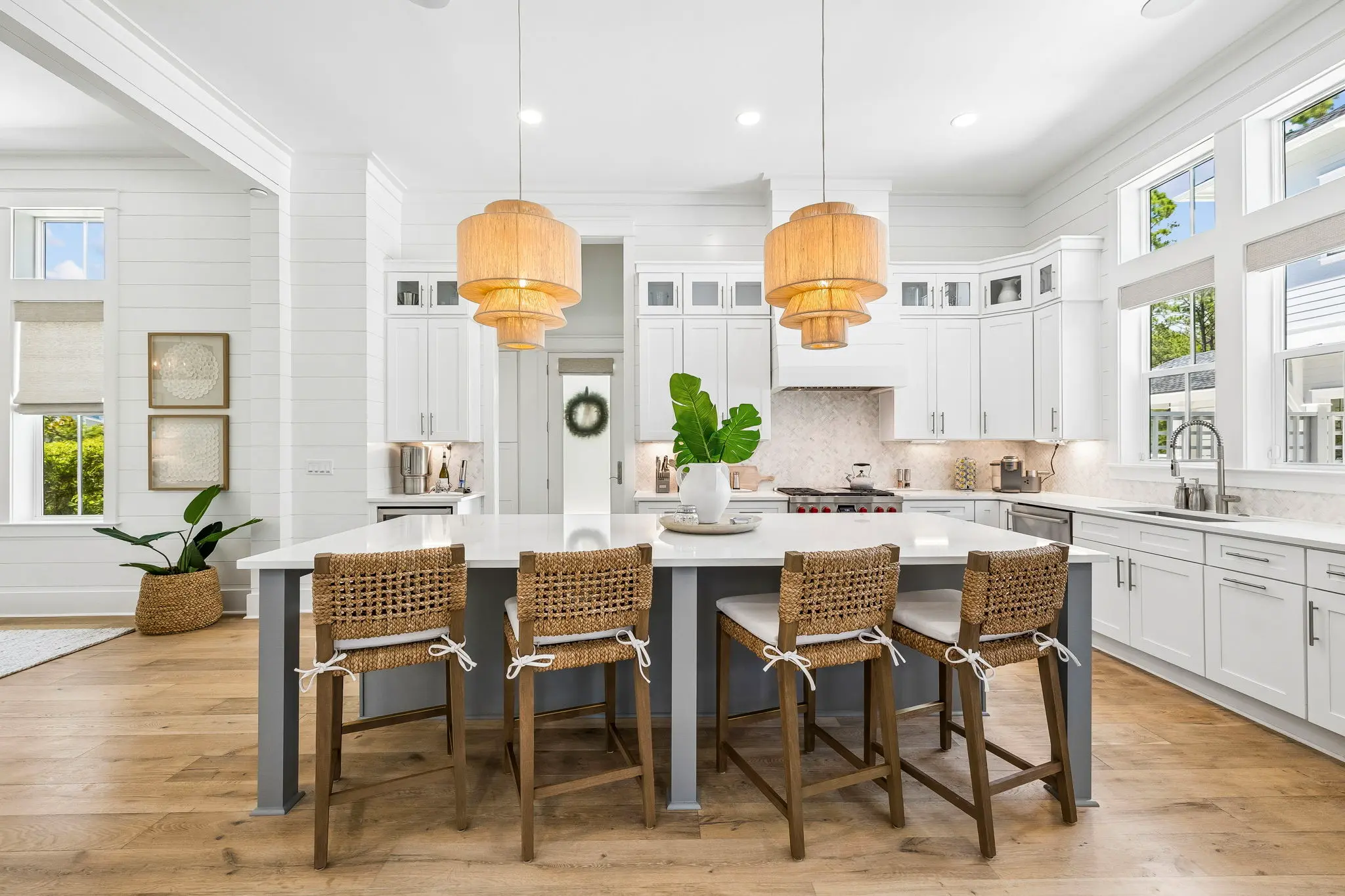

Watersound Origins is a legitimate luxury segment. Custom homes are trading in the $700 to $800 per square foot range, Powell Landing West is pushing pricing above $4 million, and upcoming phases like Lafayette Park and The Gallery are targeting an even higher end. Meanwhile, entry-level new construction is disappearing. Buyers under roughly $1.5 million will increasingly find themselves in the resale market rather than new construction. Origins is no longer just the affordable alternative in the Watersound family.
For years, the way most buyers framed the Watersound family was simple. Camp Creek was the luxury custom play. Origins was the more accessible full-time living community. That framing is now outdated. Homes in Origins are approaching $4 million, custom builds are trading at Camp Creek-adjacent per-square-foot numbers, and buyers who could easily purchase in Camp Creek are choosing to build in Origins instead. The question is no longer whether Origins can support luxury pricing. The question is how much higher it can go.
Where Origins pricing actually is right now
Custom homes in Watersound Origins are now trading in the $700 to nearly $800 per square foot range. Powell Landing West's custom homesites and Huff Homes' recent builds are pushing the pricing ceiling to $4.1 million. That represents a real overlap with Camp Creek value ranges, which would have been unthinkable in Origins even two or three years ago. The homes are larger, the finishes are more aggressive, and the lots are being valued differently than they were during the earlier phases.
Powell Landing West is setting the new ceiling
Powell Landing West is where the current luxury pricing is being written. A recent pending listing at 130 E Elliot Way sits at a $3.995 million list price on 5,103 square feet ($782.87 per square foot), with Lake Powell views on what is arguably one of the strongest custom homesites in the phase. Huff Homes' custom homesites, backed by deep lots and a wooded backdrop, are also selling fast at the $700 range per square foot. Recent activity: Lot 63 pending at $3,395,900 (4,460 square feet), Lot 55 listed at $3,195,000 (4,200 square feet), Lot 60 pending at $2,724,050 (4,560 square feet), and the phase's lowest priced pending home at Lot 61 with a $2,699,900 list price on 3,500 square feet.
Arkon's section is expected to keep trending in the same direction. Lot 22 and Lot 23 recently sold in the $2.3 to $2.4 million range and neither lasted a week on market. The four Arkon homesites backing to the tree line will likely push pricing higher on the next round, while the four backing to power lines will probably stay sub-$1 million with three-bedroom floor plans. Once the outskirt lots in Powell Landing East are built out just across the water, only Boswell's interior lots will remain in that phase.
What's happening in Greenway (and why it matters)
Greenway is nearly complete. Only three lots remain in the entire phase, all three sit on the golf course, and all three are owned by Dune Construction. Plans in the works range from $3.7 to $3.9 million depending on finish level. Dune just closed a nearly 5,300 square foot, five-bedroom home at $3,725,000 ($703.89 per square foot). If you wanted a golf-course-front position in Origins, the window is essentially down to what Dune builds next.
Lafayette Park: A different architectural direction
One phase worth watching closely is Lafayette Park. It is expected to include 57 homesites and sit adjacent to Longleaf Park. Based on the teasers coming out of the architects and the onsite team, the design direction leans heavily on New Orleans architecture, which gives it a distinct identity in a community that has otherwise been coastal in feel. If those concepts make it into production, Lafayette Park could end up being one of the most architecturally unique neighborhoods Origins has developed. Pricing is expected to start in the mid-$2 million range.
The Gallery: A retail-homesite phase between Origins and Camp Creek
The phase that may matter most for the future of Origins is The Gallery. Details are still limited, but the emerging picture is that this phase is being designed to fill the geographic and product gap between Origins and Camp Creek, with meaningful investment behind it. The expected release timeline is early 2027.
What makes this phase different: these are expected to function more like retail homesites. Rather than purchasing a completed builder product, buyers would purchase the homesite, select a builder, and build a truly custom home. That is the same formula that has worked in Camp Creek and now in Powell Landing West. If The Gallery unfolds the way current signals suggest, it represents another meaningful step in Origins moving toward the Camp Creek model rather than sitting alongside it.
Where does affordable new construction go from here?
This is the harder question, and it is the one buyers under $1.5 million need to think about now. Longleaf Park is selling through. Arborview is progressing. Powell Landing West is trending decidedly luxury. Greenway is nearly complete. The Gallery appears positioned for custom construction. Lafayette Park is expected to target a higher-end buyer as well.
Meanwhile, demand for luxury product is strong. Builders are not building larger homes and pushing pricing higher because they can. They are doing it because buyers keep purchasing them. The buyer pool at $3 million plus is deep enough that builders are optimizing around it.
For buyers hoping to stay below roughly $1.5 million, the honest read is that the conversation shifts toward resale inventory rather than new construction. Origins still has a healthy resale pool, and there is real value in owner-modified homes in the older phases, but the days of buying new construction in Origins at the entry-level end of the range are narrowing quickly.
What this means for buyers today
Origins has evolved from the affordable alternative to a community with a legitimate luxury segment of its own. The pricing ceiling continues to move higher. Homes continue getting larger. Custom construction opportunities are expanding. The gap with Camp Creek is narrowing, and depending on how The Gallery and Lafayette Park unfold, that gap may narrow further.
For buyers, the practical takeaway is that the strategy inside Origins depends on where in the range you enter. Above $2.5 million, you are building or buying into an appreciating luxury segment where phase, lot, and builder selection matter more than ever. Below $1.5 million, resale is where the value lives now, and the strongest resale opportunities are lots and homes with room to update rather than turnkey product at the top of the range.
Frequently Asked Questions
Is Watersound Origins becoming a more luxury community?
es. Custom homes are now trading in the $700 to nearly $800 per square foot range, Powell Landing West is pushing above $4 million, and upcoming phases like Lafayette Park and The Gallery are positioned to target a higher-end buyer. Origins is no longer just the affordable alternative to Camp Creek; it is developing a real luxury segment of its own.
Is Watersound Origins a good investment given the luxury shift?
The luxury segment has appreciated meaningfully because Watersound Club-adjacent land near 30A is limited and demand for higher-end product has been consistent. It rewards a strategic build (right phase, right lot, right builder) more than a generic entry. The stronger long-term positions are in phases with lot scarcity and custom potential rather than in production builds at the top of their segment.
Can you still buy new construction in Watersound Origins under $1.5 million?
It is getting harder. Longleaf Park is selling through, Arborview is progressing, and the phases still opening (Powell Landing West, Lafayette Park, The Gallery) are trending luxury. Buyers under $1.5 million looking for Origins should increasingly focus on resale, especially owner-modified homes in the older phases where there is room to update.
Powell Landing West vs Greenway: which is the better luxury play?
They serve different goals. Greenway has the golf-course frontage and is nearly complete, with only three golf-course lots left (all Dune Construction). Powell Landing West is where the current custom-luxury pricing is being written, with Huff Homes, Arkon, and other builders pushing the ceiling. Golf-course buyers focused on scarcity lean Greenway. Buyers who want new custom product with room to run lean Powell Landing West.
What is Lafayette Park at Watersound Origins?
A planned 57-homesite phase adjacent to Longleaf Park, expected to feature New Orleans-influenced architecture that stands apart from the coastal style dominant elsewhere in Origins. Pricing is expected to begin in the mid-$2 million range. It has the potential to be one of the most architecturally distinctive neighborhoods in the community.
What is The Gallery at Watersound Origins?
An upcoming phase expected to release in early 2027, being designed to fill the gap between Origins and Camp Creek. The current signal is that these will function as retail homesites, meaning buyers purchase the lot, choose an approved builder, and build custom, following the formula that has worked in Camp Creek and Powell Landing West. If it unfolds this way, it represents a real step in Origins moving toward the Camp Creek model.
Is Watersound Origins catching up to Watersound Camp Creek?
The gap is narrowing in specific pockets. Custom homes in Powell Landing West are now trading at per-square-foot numbers that overlap Camp Creek's range, and The Gallery is being positioned to serve a similar retail-homesite buyer. That said, Camp Creek retains a different structural position: gated, non-rental, estate-lot, with mandatory Watersound Club membership tied to lot purchase. Origins is developing a luxury segment; Camp Creek is a purpose-built luxury community. They are converging, not merging.